






Sept Rate Cut Odds
The Fed hasn’t flipped to rate cuts. Markets and the FOMC spent the first half of 2026 walking away from them. What’s happening now is messier: a hawkish chair, still-high inflation, and a labor market that just flashed a warning light.
Here’s the actual setup heading into the September 15–16 meeting.
How we got here
Rates have sat at 3.50%–3.75% since late 2025. Early-year pricing assumed more cuts in 2026. That faded for three reasons:
1. Inflation never got all the way home. The Fed’s preferred PCE gauge has been above the 2% target for more than five years. By mid-2026 it was running around 3.7% year-over-year, with the six-month pace even hotter. Core CPI cooled to 2.5% in July, but that’s not the official target and it’s not “mission accomplished.”
2. The Iran conflict and energy shock. Oil and gasoline spiked, headline inflation jumped, and officials stopped treating the surge as something they could simply look through. Supply shocks plus tariffs plus AI-related demand made the inflation side of the dual mandate the priority.
3. New leadership. Kevin Warsh took over as chair in May. He has been explicit: 2% is a hard target, inflation is a choice the Fed has to own, and short-term rates are the main tool. At Jackson Hole he said recent cooler prints “do not tell me that underlying trends have meaningfully improved” and that if officials aren’t confident inflation is moving toward 2% “clearly and at sufficient speed,” they “have work to do.” Markets heard that as a hike door left open.
The July meeting captured the split: 9–3 to hold, with three regional presidents wanting a quarter-point increase. The easing bias that used to sit in the statement is gone.
What started to change the math
Two data points pulled hike odds down from their highs, even if they haven’t produced a cut call.
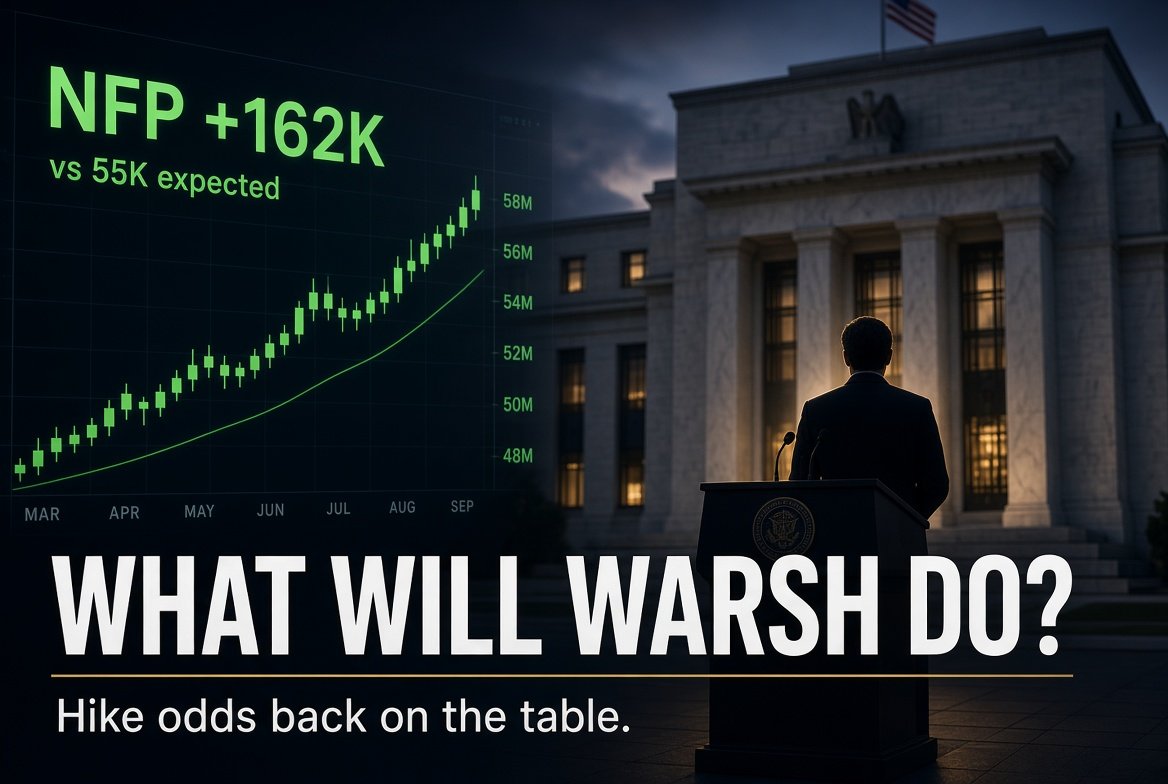
Jobs cracked. July nonfarm payrolls fell 23,000. May and June were revised down by more than 100,000 combined. Three-month average job growth collapsed. Unemployment ticked down to 4.1% only because people left the labor force. Wage growth is muted. That’s not a booming labor market that can shrug off tighter policy.
Inflation cooled on the surface. July CPI rose 0.1% month-over-month. Headline year-over-year eased to 3.4%. Energy fell. Core was 0.2% / 2.5%. That’s the second straight month of softer CPI after a hotter stretch. It gave the “inflation-first” camp less urgency for an immediate hike.
That’s why some commentary flipped from “hike in September” to “dual mandate is back in play.” A Fed that was acting inflation-only now has to weigh a stalling jobs market against prices that are still too high.
What would actually produce cuts
A real pivot toward cuts would need more than one weak payroll print. Officials would likely want:
• Sequential core inflation drifting toward 2% for several months, not one good CPI
• Clear fading of the energy/tariff/goods shock rather than another oil spike
• Labor demand that keeps weakening (claims up, hiring down, unemployment drifting higher) without a wage rebound
• Evidence that current rates are already restrictive in credit and loan markets (Warsh has said they don’t look that tight)
Until that stack shows up, the base case into mid-September is still hold-or-hike, not cut. Futures have been swinging between a sizable chance of a 25 bp hike and a hold; cut pricing for this meeting has been near zero. August jobs (out Friday) and August CPI (September 11) will decide how loud the labor-market argument gets.
The honest takeaway
The Fed changed its mind away from 2026 cuts when inflation re-accelerated and leadership changed. The recent jobs miss and cooler CPI are what could change it again—but only if the next few prints confirm the labor market is the bigger risk. One bad jobs number does not equal a cutting cycle. Sticky 3%+ inflation plus a chair who just told Jackson Hole that prices come first is still the binding constraint.
Watch the data, not the narrative. The September meeting is a close call on hold vs. hike. Cuts are the later conversation, if the labor side keeps deteriorating and inflation actually cooperates
Please follow and like us:













Post Comment